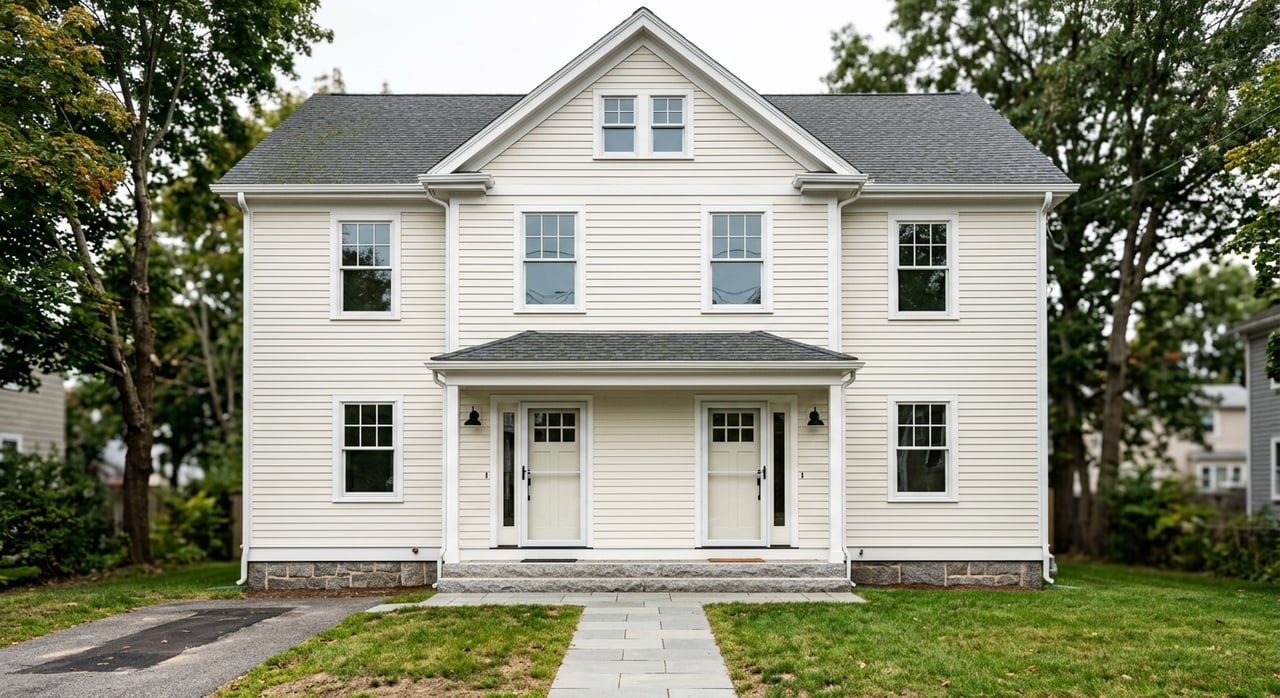
Lincoln RI Investment Property Guide for Smarter Buying
June 18, 2026
June 18, 2026
Are you looking at Lincoln, Rhode Island, and wondering whether the numbers and the town’s layout actually support a smart investment? That is a fair question, especially in a market that feels stable on the surface but still demands careful underwriting. If you are considering a rental, small multifamily, mixed-use asset, or value-add property here, understanding how Lincoln is built, where growth fits, and what local costs can affect your return matters. Let’s dive in.
Lincoln has the kind of housing profile that often appeals to investors who prefer stability over speculation. The town’s estimated 2024 population is 23,507, with 8,795 households, and 72.1% of housing units are owner-occupied. That points to a market shaped more by long-term ownership than by heavy renter turnover.
The income profile also stands out. Median household income is $115,181, and median gross rent is $1,468. In practical terms, that can support demand for well-kept homes and smaller investment properties, especially when the property offers solid condition, functional layouts, and easy access to commuter routes.
Lincoln also appears relatively settled. About 93.4% of residents were living in the same home one year earlier, 45.9% of adults hold a bachelor’s degree or higher, and 91.1% of households have broadband internet service. For you as an investor, that can suggest a dependable resident base and demand that rewards quality and consistency.
Lincoln has an older-leaning but balanced population mix. About 24.0% of residents are 65 or older, while 21.5% are under 18. That matters because the town may support more than one housing need at the same time.
You may find opportunity in homes that appeal to households looking for extra space, as well as in smaller and easier-to-maintain properties that fit downsizing needs. Accessible layouts, practical updates, and well-located properties can matter more here than chasing flashy finishes that do not match the market.
One of the most important things to understand about Lincoln is that it is not a single, interchangeable investment landscape. The town’s draft 2026 comprehensive plan shows clear differences between areas, and those differences can shape what types of deals make sense.
Lime Rock and Lonsdale are described as primarily residential areas with lower- to medium-density patterns. These areas tend to fit more conventional strategies, such as single-family holdings, owner-occupied investment setups, or smaller residential properties.
If you are looking for a straightforward suburban rental or a property with moderate renovation upside, these areas may align better with that goal than a more aggressive redevelopment plan. The key is matching your project to the established scale of the area.
Manville is more flexible from an investment perspective. The town identifies it as an area that can support higher densities and a more diverse housing mix.
That makes Manville worth a closer look if you are considering incremental infill, duplexes, small multifamily properties, or other modest density plays. It may offer more room for creativity, but your plan still needs to line up with local approvals and infrastructure realities.
The Industrial Corridor is Lincoln’s primary business and manufacturing zone, and it includes the Lincoln Mall area. This area is more relevant if you are evaluating mixed-use potential, commercial repositioning, or assets connected to higher-density uses.
For the right buyer, this can create opportunity beyond the standard residential model. Still, this is the kind of area where zoning, access, and long-term use assumptions should be reviewed very carefully before you commit.
Lincoln’s planning direction also supports residential reuse of older mill buildings. That is important if you are drawn to conversion-style or adaptive reuse opportunities.
In the right location, an older building may offer stronger value-add potential than a detached home that has little flexibility. These deals can be compelling, but they also require sharper due diligence around building systems, approvals, and site constraints.
Lincoln’s planning direction suggests that smaller-scale, practical projects may be the best fit. Rather than betting on major speculative redevelopment, you may see better results with deals that respect the town’s existing village structure and infrastructure.
Potential opportunities may include:
From 2016 to 2021, one-unit attached homes and two-unit homes were among the most commonly built housing types in Lincoln. That is a useful clue. It suggests that the market and planning environment may be more receptive to modest, well-placed housing types than to oversized or out-of-place development concepts.
Lincoln’s location benefits from strong road access, and that can support both owner and tenant demand. Route 146 is a major corridor, with about 171,000 vehicles using it daily.
That said, roadway convenience comes with a due-diligence angle. The Route 146 reconstruction project is intended to repave 8 miles, replace bridges, and improve the corridor between I-295 and the Massachusetts state line, with completion currently targeted for 2026.
If you are buying, renovating, or repositioning a property during this period, access is not something to assume. Contractor logistics, lane closures, truck access, and commute patterns can all affect your timeline and carrying costs.
Lincoln is still largely a car-oriented town, but nearby regional transit expands the commuter picture. The Pawtucket-Central Falls Transit Center opened on January 23, 2023, combining MBTA commuter rail with a RIPTA bus hub.
That connection can widen the area’s appeal for people commuting toward Providence, Boston, or other Massachusetts destinations. It does not change Lincoln into a transit-first market, but it does strengthen its position within a broader regional network.
For many investors, Lincoln is likely to reward renovation discipline more than aggressive rent chasing. If you are buying an older home, small multifamily, or mixed-use property, the local approval process and site conditions should be part of your first-pass analysis, not an afterthought.
Lincoln’s Building Department handles building, mechanical, electrical, plumbing, demolition, solar, and zoning applications. Its materials also include resources tied to site-plan approval, septic systems, sewer lateral location, and stormwater guidance for single-family permits.
That means your renovation budget should reflect more than finishes and labor. It should also account for the time, approvals, and site work that can affect the true cost of execution.
Flood and drainage risk should be taken seriously in Lincoln, especially near the Blackstone River and other low-lying areas. The town’s Hazard Mitigation Plan addresses hurricanes, nor’easters, flooding, and high wind.
The draft 2026 comprehensive plan states that about 684 acres, or 5.65% of the town, are subject to FEMA floodway or floodplain classifications. If you are reviewing river-adjacent, mill-adjacent, or low-elevation property, flood-zone verification and insurance costs should be part of your underwriting from day one.
A property can look attractive on price and still become much less appealing once you factor in drainage improvements, insurance requirements, or overlay-related constraints. This is one area where disciplined review can protect your return.
It is easy to focus on purchase price and projected rent, but local carrying costs matter just as much. Lincoln’s 2026 tax rates are $13.98 per $1,000 of assessed value for residential real estate and $24.45 per $1,000 for commercial real estate.
That split matters if you are comparing property types or considering mixed-use. The town’s homestead exemption applies only to owner-occupied parcels with one to five dwelling units, and it does not apply to commercial or mixed-use property.
In other words, you should not assume a tax advantage will carry over just because a seller benefited from owner-occupant treatment. Make sure your numbers reflect the correct class and actual eligibility.
Lincoln also charges $125 per residential unit per year for town sewer connections. Commercial sewer is billed by meter use, and the town notes that sewer assessment charges may apply to new or subdivided development.
For you, that means sewer should be modeled as its own line item. If you are exploring redevelopment or subdivision, it is smart to check potential assessment exposure early rather than discovering it later in the process.
Strong investing in Lincoln is less about chasing a headline and more about asking the right local questions. Before you move forward on a property, make sure you understand the site, the approval path, and the operating costs.
A solid due-diligence checklist includes:
These are not minor details. In a town like Lincoln, they often make the difference between a smooth hold and an expensive surprise.
Lincoln can be a compelling market if your strategy is selective, practical, and grounded in local realities. Its high owner-occupancy rate, strong household income profile, village-based land-use pattern, and access to major corridors can support steady demand for the right property.
The best opportunities may be in well-bought single-family homes, duplexes, small multifamily properties, mixed-use assets in the right locations, and adaptive reuse plays that fit the town’s planning direction. If you approach Lincoln with careful underwriting, renovation awareness, and a clear understanding of taxes, sewer, access, and flood risk, you will be in a much better position to spot the deals that truly make sense.
If you are weighing an investment purchase in Lincoln or want a clearer read on how a specific property fits your goals, Stefanie Carr offers thoughtful, renovation-informed guidance for residential, mixed-use, and investor-minded opportunities across Rhode Island.
Stay up to date on the latest real estate trends.

Work with Stefanie Carr for expert guidance, local insight, and a personalized real estate experience in Providence and throughout Rhode Island. Every detail is handled with care, strategy, and your goals in mind.