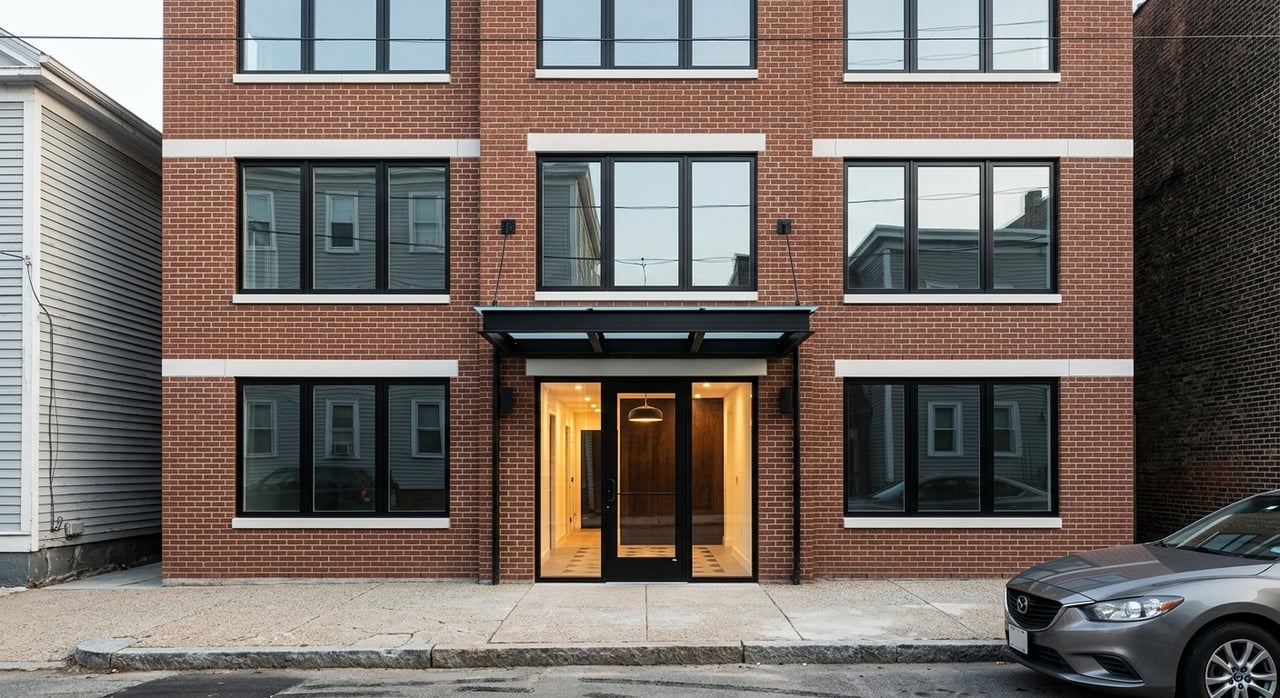
How Providence Condos Compete With Boston Commutes
May 14, 2026
May 14, 2026
Wondering if you really have to pay Boston condo prices to stay connected to Boston work? If your job, clients, or office rhythm still pulls you north, Providence offers a compelling middle ground. You can keep access to major Boston job centers while buying into a more affordable urban market with its own downtown energy, walkability, and arts identity. Let’s dive in.
Providence sits on the Northeast Corridor and has a downtown rail station at 100 Gaspee Street. Amtrak identifies Providence as an Amtrak and MBTA station, which matters if you want a downtown-to-downtown commute instead of a long drive plus parking search.
For many buyers, that is the real headline. You are not just buying a condo in Rhode Island. You are buying practical access to Boston, with some Amtrak Boston to Providence trips clocking in at about 39 to 41 minutes and broader Boston-focused service described as getting you to the heart of Boston in under an hour.
That access also lines up well with Boston job centers. South Station gives you convenient access to the Financial District, while Back Bay places you near major commercial and retail areas. If you work a hybrid schedule, that kind of rail connection can make Providence feel much closer than the map suggests.
There is one important caveat. Amtrak currently lists the Providence station as closed during construction from April 28 to May 15, 2026, so it is smart to check current service alerts before you rely on a specific commute plan.
The biggest reason many buyers start this comparison is simple: price. Current condo snapshots show a median listing price of $442,000 in Providence versus $845,000 in Boston.
That puts Providence at roughly 48% lower in median condo listing price than Boston. For many buyers, that gap can change what feels realistic, whether that means buying sooner, keeping more monthly flexibility, or targeting a unit with features that might be out of reach in Boston.
This does not mean Providence is a bargain-basement version of city living. It is better understood as a lower-price urban market with a different mix of supply, building style, and lifestyle tradeoffs.
If you worry that moving from Boston to Providence means giving up city life, the data says otherwise. Providence has a Walk Score of 76, while Boston sits at 83.
That is a difference, but not a dramatic shift from urban to suburban living. In practical terms, Providence can still offer the convenience, street activity, and neighborhood feel that many condo buyers want, just at a lower entry point.
The city also has its own cultural identity. Providence’s Arts, Culture & Tourism department describes its role as supporting a vibrant, creative city through public art and programming across all 25 neighborhoods.
For you as a buyer, that means Providence is not just a place to sleep between workdays in Boston. It is a city with its own rhythm, character, and reasons to stay local when the workweek ends.
The station location matters almost as much as the train itself. Providence’s downtown rail access pairs commuting function with a genuinely city-centered lifestyle.
Amtrak highlights nearby destinations like the Rhode Island State House, Westminster Arcade, and the RISD Museum and Providence Arts District. That makes the experience feel less like a park-and-ride routine and more like living in an actual downtown neighborhood with places to walk, meet friends, and spend your time.
If your goal is to balance Boston career access with a lifestyle that still feels engaging and local, this is where Providence stands out. You can step off the train and still be in a city environment, not a car-dependent fallback.
When you compare a Providence condo to a Boston condo, the smartest lens is not just sticker price. It is total monthly carrying cost.
That means looking at:
The MBTA’s commuter rail fare pages show one-way fares ranging from $2.40 to $13.25 systemwide, with monthly passes ranging from $90 to $426. Your exact commuting cost will depend on your route and schedule, but the key point is clear: train access is a recurring budget item, not just a convenience.
If you work in Boston two or three days a week, Providence may still compare favorably once you run the numbers. But the right comparison is always your full monthly picture, not just the list price.
Parking is one of the most overlooked condo details for Boston commuters. In Providence, parking conditions vary by building and neighborhood, and it should never be treated as automatic.
City parking materials note metered spaces throughout Downtown, College Hill, Federal Hill, the Jewelry District, near the State House and Train Station, and in Wayland Square. Private garages and lots are also available downtown, which means you may encounter several different parking setups depending on the building.
Before you buy, confirm whether the unit includes:
If you plan to keep a car for some commuting days, weekend travel, or general flexibility, this detail can affect both your budget and your day-to-day convenience.
Buyers looking for a Boston-friendly condo lifestyle often focus on areas that support walkability, neighborhood character, and practical access to downtown. Current market snapshots point to East Side and Fox Point among Providence’s popular condo areas.
That does not mean every commuter should choose the same location. Some buyers want to be as close as possible to the station and downtown amenities, while others are willing to trade a slightly longer trip for a specific building style, quieter street, or stronger sense of neighborhood texture.
This is where a focused condo search matters. The right fit depends on how often you commute, how much you value walkability, and whether your ideal home is a polished newer unit, a historic building, or something in between.
A great commute does not make up for a poor building fit. Providence’s condo inventory often includes older buildings with character, and that can be appealing, but it also makes due diligence more important.
As you compare options, pay close attention to:
For many buyers, this is where a lower purchase price can become more nuanced. A condo that looks attractive at first glance may carry higher dues, more limited parking, or building features that do not suit your routine.
Providence condos compete with Boston commutes because they offer a three-part value story that is hard to ignore. You get meaningful rail access, a major price advantage, and a city lifestyle that still feels lively and connected.
For the right buyer, that can be a smart trade. Instead of paying Boston’s premium for proximity alone, you may be able to buy into Providence and still keep a realistic path to Boston offices, meetings, and business districts.
The result is not just lower cost. It can also mean more choice, more flexibility, and a daily life that feels more sustainable.
If you are weighing Providence against Boston, the best next step is to compare real numbers and real buildings, not broad assumptions. A thoughtful condo search should look at commute patterns, HOA structure, parking, and building condition together so you can judge the full value with clarity.
If you want help narrowing the right Providence condo options for your schedule, budget, and lifestyle goals, connect with Stefanie Carr to schedule a consultation.
Stay up to date on the latest real estate trends.




Work with Stefanie Carr for expert guidance, local insight, and a personalized real estate experience in Providence and throughout Rhode Island. Every detail is handled with care, strategy, and your goals in mind.